What Is a Creator Storefront? Definition, Examples & ROI
A creator storefront is a branded shop fronted by a creator and operated by a brand. How they work, what they replace, and why NARS doubled CVR with them.
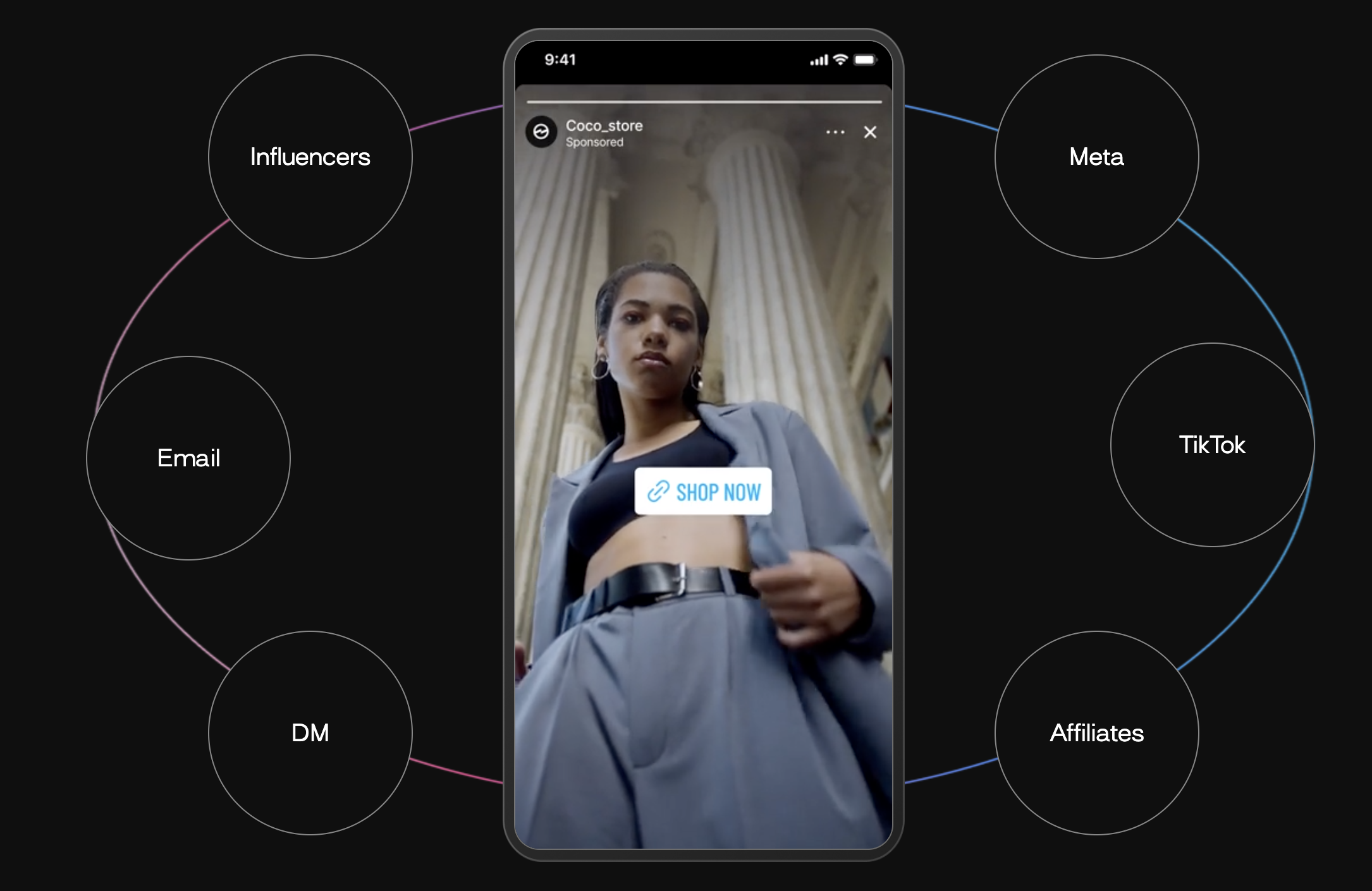
A creator storefront is a dedicated, shoppable store built around a single creator — their photography, their edit of a brand's catalogue, their voice — where their audience can buy directly. The brand operates the infrastructure; the creator fronts the experience; every sale is attributed to them.
That's the definition. The reason the term is suddenly everywhere is simpler: affiliate links and discount codes are leaking money, and creator storefronts are what brands are replacing them with.
The Problem Creator Storefronts Solve
The standard creator playbook hasn't changed in a decade: creator posts, audience clicks a link in bio, lands on the brand's generic homepage or a PDP, and a discount code at checkout ties the sale back to the creator. Every step of that chain drops people.
The homepage doesn't mention the creator who sent them. The catalogue shows 400 products instead of the four the creator actually uses. The discount code gets scraped by coupon sites within hours, so attribution muddies and the creator's "exclusive" offer is on Honey by Friday.
The shopper started in a high-trust context — a person they follow recommending something specific — and landed in a low-trust one: a storefront that has no idea who sent them.
How a Creator Storefront Works
A creator storefront keeps the context. Instead of a link to your homepage, the creator shares a link to their store:
- Their branding — the creator's name, photography, and tone front the page, co-branded with yours
- Their edit — a curated selection of your catalogue: the products they genuinely use and talk about
- Your infrastructure — the store is synced to your commerce platform (Shopify, SFCC, Magento), so inventory, pricing, and checkout are the real thing, not a copy
- Built-in attribution — every session and sale on that URL belongs to that creator. No codes to scrape, no last-click disputes
- Automated payouts — commission flows from attributed revenue, not from code redemptions
One subtlety worth naming: this is the brand-side model, where the brand owns the catalogue and the creator fronts the store. There's a separate creator-side category — platforms like Fourthwall or Stan Store, where creators sell their own merch and digital products. Both get called "creator storefronts." If you're a brand running a creator program, you want the first kind. (We compare both camps in our creator storefront platforms roundup.)
What the Numbers Look Like
This isn't theoretical. When NARS ran creator storefronts with make-up artist Charly Salvatore, the dedicated store more than doubled conversion rates and lifted AOV by 40% against their standard funnel. Supercilium, a brow-expert brand, cut CAC with creator UGC micro-stores by routing influencer traffic into stores that matched the content that sent it.
The mechanism is the same one that makes micro-stores work for paid social: the post-click experience matches the context of the click. A shopper arriving from a creator's Reel converts better in that creator's store than in your generic one — not marginally better, multiples better.
REFY, the beauty brand, has pushed the model furthest in public: their community trips and curator programme treat top customers and creators as storefront-worthy partners, not coupon distributors.
Creator Storefront vs the Alternatives
Vs affiliate links: an affiliate link changes where credit goes; a storefront changes what the shopper experiences. Attribution improves either way — conversion only improves with the storefront.
Vs discount codes: codes are attribution by lossy proxy, and they train your audience to wait for discounts. Storefront attribution is session-based and doesn't require giving away margin to measure.
Vs TikTok Shop and platform-native shops: native shops convert in-app but the platform owns the customer, the data, and increasingly the margin. A creator storefront runs on your domain and your checkout — the customer relationship stays yours.
How to Launch Creator Storefronts
The operational bar used to be the blocker — nobody can hand-build and maintain fifty stores. That's the part that's changed:
- Connect your catalogue. Comet syncs to Shopify in one click; SFCC and Magento via cartridge/integration.
- Spin up a store per creator. Templates plus an AI builder mean a branded store takes minutes, not a design sprint. With the API or MCP, "create stores for these 20 creators" is one command.
- Give each creator their URL. It goes in their bio, their captions, their stories — anywhere a link works.
- Track and pay from the same place. Per-store funnels show which creators sell, not just which ones drive clicks. Payouts run off attributed revenue.
Creator storefronts are one channel of a broader pattern — programmatic storefronts for every partner channel that sends you traffic, whether that's a creator, a publisher, a campaign, or an AI agent.
If you're running a creator programme on links and codes today, the gap between what you're paying creators and what you're capturing from their traffic is the business case. See how creator storefronts work on Comet, or book a demo — your first creator store can be live this week, from $49/mo.
Build your first Checkout Store free.
Connect your store and launch a curated funnel in minutes.