A Checkout Store for every creator you work with.
Each creator's audience arrives with intent. Comet funnels it into their own branded Checkout Store — personalized media, copy, and codes across the full funnel. Launch one or a thousand, and let each one self-optimize.
Everything personal to the creator — nothing manual for you.
Full-funnel personalization
Creator-specific imagery, copy, and product picks from the ad through to the PDP.
Custom codes
Unique discount and tracking codes per creator, applied automatically at the store.
Programmatic setup
Spin up Checkout Stores in bulk from a CSV or hand it to an AI agent — no per-store busywork.
100% attribution
See revenue, AOV, and audience analytics for each creator — not a blended number.
Smartlinks
One link per creator that routes to the right Checkout Store and self-optimizes the funnel.
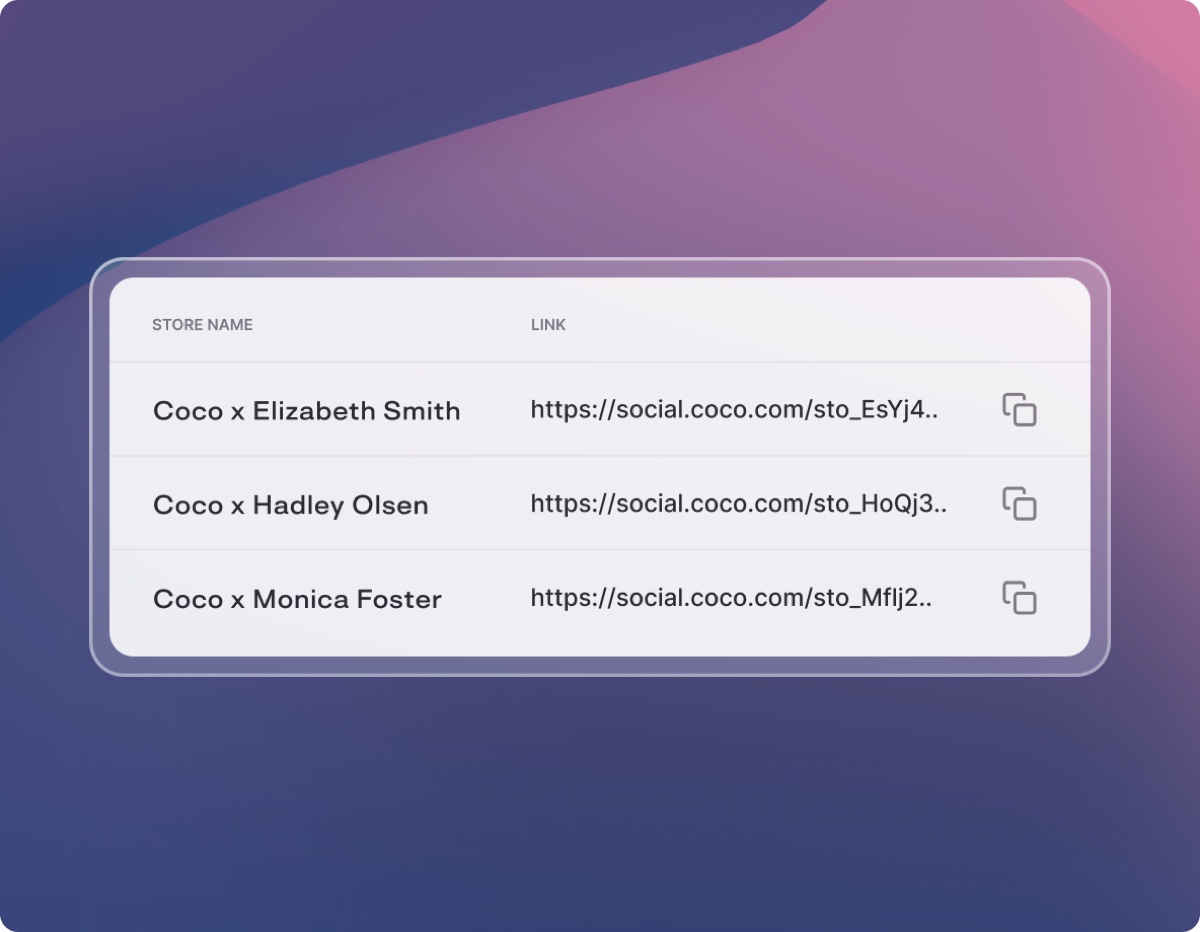
A store, and a tracked link, for every creator.
Each creator gets their own Checkout Store and a unique smartlink, so every click and order is attributed to the right partner automatically. No spreadsheets, no guesswork.
Launch a creator program in an afternoon.
Onboard your roster once, then generate and update Checkout Stores as the program grows.
Start free trialImport your roster
Upload a CSV of creators, handles, and codes — or connect your influencer platform.
Generate Checkout Stores
Comet builds an on-brand Checkout Store per creator with their products and offer.
Share smartlinks
Each creator gets one link; Comet routes traffic, tracks it, and tunes the funnel.
Turn your roster into a hundred Checkout Stores that sell.
Questions, answered.
What is a creator Checkout Store?
A branded storefront for one creator: their product picks, code, and content from landing page to checkout, kept in sync with your catalog.
Can I launch one per creator at scale?
Yes. Generate stores in bulk from a CSV or an AI agent; each gets its own smartlink, code, and analytics.
How is attribution handled?
Every creator store is its own measurable surface, so revenue, AOV, and conversion attribute to the exact creator, not a blended number.
Do creator discount codes apply automatically?
Yes. Each store applies the creator's code at the cart, and it carries through your native checkout.