5 Ways Shopify Merchants Use Micro-Stores to Convert
Discover how Shopify merchants use micro-stores for persona targeting, angle testing, influencer partnerships, and UGC campaigns.
Most Shopify merchants spend the majority of their growth budget on traffic — paid social, creator partnerships, influencer drops, email blasts. Then they send every click to the same destination: the main store homepage or a single product page that has to convert every audience at once.
It doesn't. One store can't speak to a 22-year-old TikTok shopper, a gift-buyer, a returning loyalist, and a paid-search bargain hunter the same way. The brands pulling the best unit economics on Shopify right now have stopped trying.
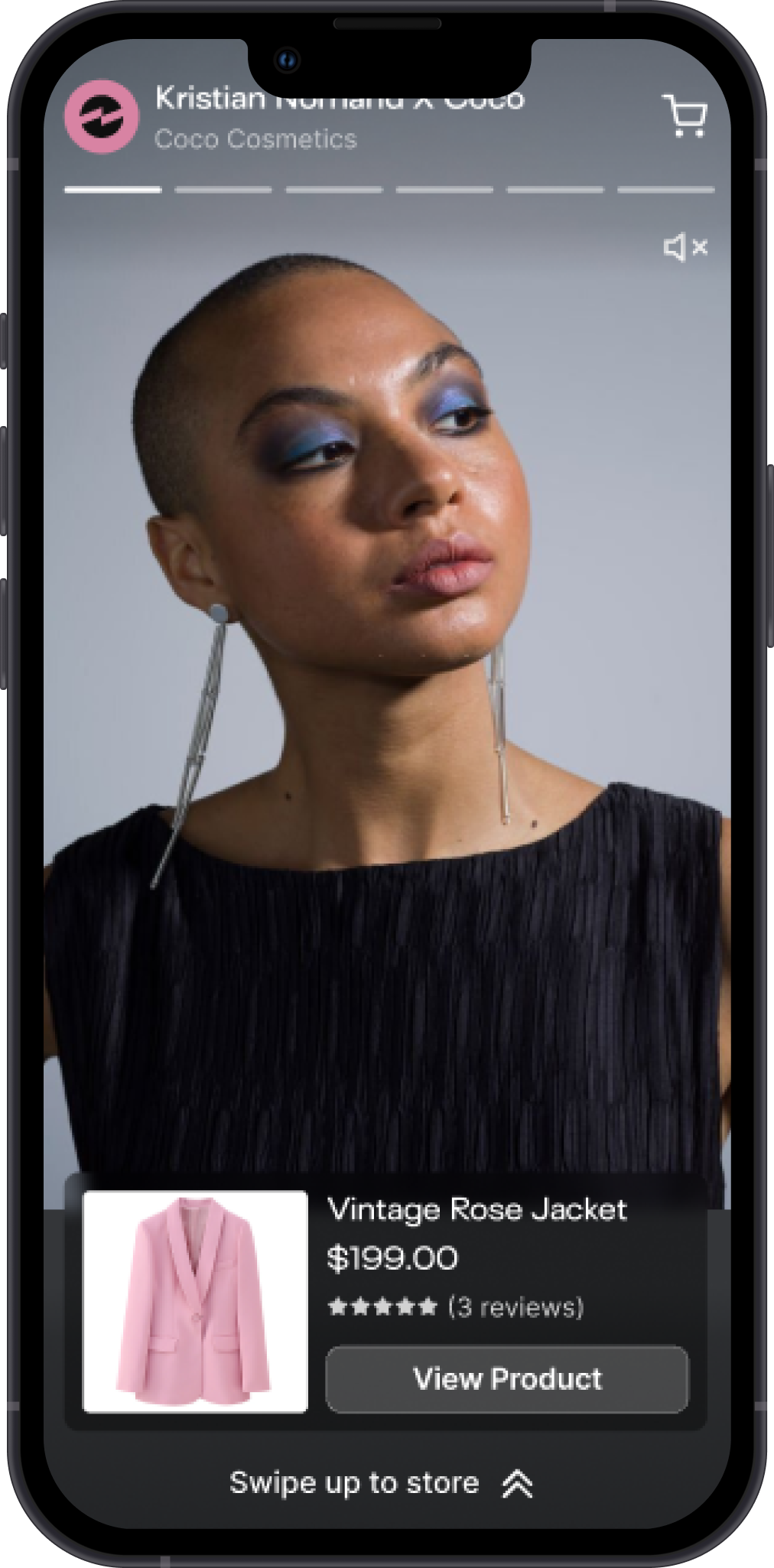
Instead, they spin up a micro-store for every campaign, creator, and audience — each one tuned to who's clicking. Same Shopify catalogue, same checkout, dramatically different conversion. Below are the five plays we see working.
1. Create Persona-Specific Micro-Stores
The fastest CVR lift on Shopify is rarely a checkout tweak — it's matching the post-click experience to the segment that just clicked.
Build one micro-store per persona. The professional gets clean editorial copy and bestsellers. The gift-buyer gets curated bundles and "perfect for…" framing. The athlete gets performance proof and reviews from people who look like them. Each store pulls from the same Shopify catalogue but ships with its own hero, copy, product order, and offer.
Supercilium ran exactly this play and cut customer acquisition cost by 79% — same products, same checkout, segmented funnels. The shopper never sees the generic homepage. They see the version of your store built for them.
2. Create Angle-Specific Micro-Stores
Persona splits the audience. Angle splits the message.
The same product can sell on price, performance, aesthetic, sustainability, social proof, or scarcity. Most brands pick one angle for the homepage and lose every shopper who would have responded to a different one. Micro-stores let you run all of them in parallel: one funnel leading with the price story, one leading with the performance proof, one leading with the editorial.
Then you let the data pick the winner. Comet's built-in A/B testing splits traffic across angle variants and surfaces the one driving the most revenue per visitor — no devs, no third-party experiment tool. Most teams find the winning angle within a week of paid spend and roll it into their evergreen funnels.
3. Test New Campaign Ideas on Paid Social
Paid social teams ship more creative than any other channel — 10 to 20 variants a week is normal. But most of that testing stays on the ad side. The landing experience stays static.
That's the bottleneck. Creative tells the shopper what the campaign is about. The post-click experience decides whether they buy. If your ad opens with a gifting hook and the landing page leads with a product spec sheet, the click was wasted.
Micro-stores let your paid team build a matching funnel for every ad variant in minutes — same catalogue, but the hero, copy, and product order all reflect the ad. Jolly Designs scaled this to a 240% CVR lift on their Meta campaigns. Pair it with full-funnel attribution and you finally see which creative plus funnel combination is producing revenue, not just clicks.
4. Create Co-branded Influencer Micro-Stores
Sending every creator's traffic to your main store is the single biggest leak in most influencer programs. The creator built trust. Your homepage doesn't continue the conversation — it resets it.
A co-branded micro-store keeps the momentum. The creator's photography, their voice, their edit of your catalogue, their why-I-love-this — all wrapped in a Shopify-synced storefront with their name on it. Shoppers see the same person they trusted on Instagram, then check out without ever leaving the experience.
NARS x Charly Salvatore ran this play and saw conversion rate double and AOV climb 40%. Attribution and payouts are automated on the backend, so your team isn't tracking spreadsheets across 50 creators — every order is tagged to the right partner from click to checkout.
5. Leverage UGC & Influencer Across Channels
The creator content you've already paid for is your most underused asset. Most brands post it once on organic social and forget about it.
Distribute it instead. Take the same UGC and run it across paid social, email, embedded inside a publisher article, or stitched into a creator's affiliate storefront — each channel getting its own micro-store version with the content already on the page. The shopper lands on a funnel that looks like the content they just engaged with, not your generic PDP.
Tribe WOD built this distribution loop and lifted conversion rate and AOV by 60% in the process. Same creator content, multiplied across surfaces, each one converting in context.
The Common Thread
The five plays above look different on the surface — persona, angle, paid creative, creator, UGC — but they share one move: each campaign gets its own funnel, instead of every campaign sharing one.
That's the unlock. Not a checkout tweak, not a theme refresh, not a new ad agency. A storefront layer that lets you ship a dedicated experience for every place your traffic is coming from, all synced to the Shopify catalogue you already run.
You can spin up your first micro-store in about five minutes. Start free on the Shopify app, or see pricing — most brands recoup the subscription on a single campaign.
Frequently Asked Questions
Do I need to rebuild my Shopify theme to use micro-stores? No. Micro-stores are independent of your main theme. They sync your product catalogue, inventory, and checkout automatically and exist as separate, attributed experiences.
How many micro-stores can I run at once? As many as you need. Brands on Comet typically run between 10 and 200 active micro-stores at a time — one per campaign, creator, or audience segment.
How is attribution handled across all these stores? Every micro-store has its own attribution tracking. You see revenue, conversion rate, and AOV per store, per campaign, and per creator — and feed that data back to your ad platforms and creator payouts.
Can I A/B test inside a micro-store? Yes. Comet's built-in A/B testing lets you split traffic across hero variants, copy, product order, and offers within the same store — no third-party tool required.
Comet
The Comet team builds social commerce infrastructure for leading ecommerce brands.
Build your first Checkout Store free.
Connect your store and launch a curated funnel in minutes.